Self-measurement service
Over 50 measurements from your body
See muscle, fat and fluid balance
59,90 €
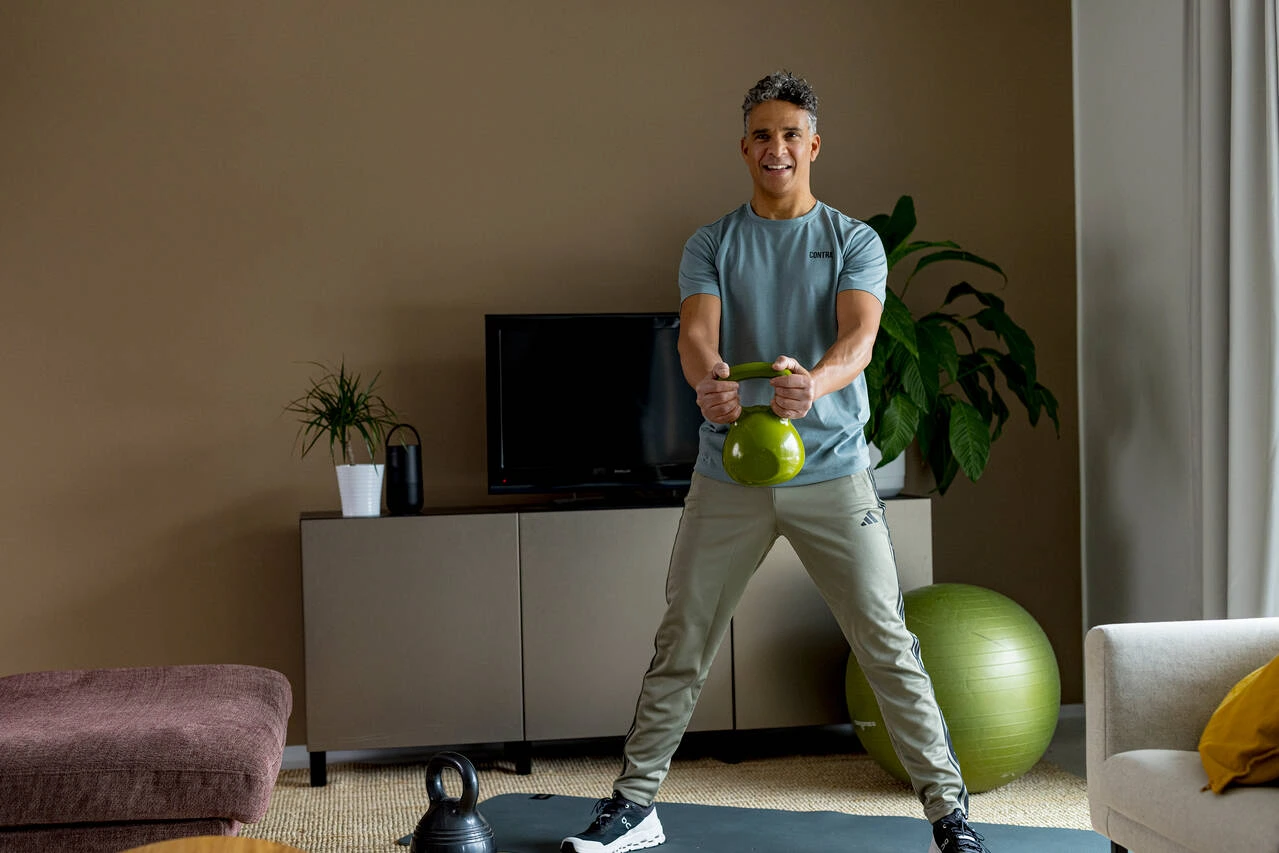
Muscle balance keeps posture, movement and power production under control. When you train in a variety of ways, increase mobility and correct everyday stress, you will experience less pain and stiffness – and your performance will increase.
Table of contents

Muscle balance describes how different muscle groups in the body, such as the anterior and posterior chain, and the right and left sides, work together. With good balance, movement is smooth and safe. This means that individual muscles are not overloaded, the natural position of the joints is maintained and power is transferred efficiently. Imbalance is often seen in incorrect postures, muscle tension and recurring pain.
Good muscle balance supports the smoothness of everyday life, work and training performance and overall well-being.
The initial state of muscle balance can be mapped with a body composition measurement (BIA), which shows the distribution of muscle mass between the halves of the body and the limbs – you can quickly see if the right and left sides, or the upper and lower body, are unbalanced. In addition, functional tests are recommended, which measure muscle strength (for example, one-legged squats and support of the back and core), check the mobility of the hips, and assess the posture of the hamstrings and thoracic spine. The overall picture is completed with a load mapping, which reviews work ergonomics and training positions, repetitive movements, the amount of sitting and breaks – in other words, everyday habits that may cause imbalance.
The pure body composition measurement describes fat-free mass in five different parts of the body. The test analyzes the balance of the right and left sides of the upper body from the muscle mass of the arms. In addition, the muscle mass of the core and the muscle mass of the right and left legs are measured. This allows you to calculate the muscle balance between the right and left sides, as well as the muscle balance between the upper and lower body. The body composition measurement tells you whether the balance in each area is good, slightly unbalanced, or severely unbalanced.
Muscle balance is best developed through varied training.
Train opposing muscles, such as biceps and extensors, as well as the front and back thighs. Combine big basic movements like squats, deadlifts, bench presses, rows, and hip raises with unilateral movements like single-leg squats, step-ups, and single-arm movements. The core is the foundation of muscle balance – that’s why working your deep abs, back, and pelvic floor is at the heart of everything.
Stretching, yoga, and dynamic mobility exercises release tension and restore range of motion. Add short periods of body care to your workout and workday.
Adjust your workstation to be ergonomic, change positions, and take micro-breaks (5–10 minutes per hour). Breathe deeply through your diaphragm – good breathing technique supports posture and core control.
Sufficient protein supports muscle maintenance and a varied diet promotes recovery. Eat whole grains, good fats and plenty of vegetables, and pay attention to the amount of protein – a suitable range for most people is around 1.2–1.6 g per kilogram of body weight per day. Sleep 7–9 hours a night, avoid late-night caffeine and make stress management a part of your everyday routine.
Tee kehonkoostumusmittaus 4–8 viikon välein ja seuraa lihasmassan jakautumista kehon puolille ja raajoihin. Kirjaa treenidata (sarjat, toistot ja kuormat) sekä yksipuoliset liikkeet – pieneneekö puolten ero mittausten välillä? Havainnoi ryhtiä, kipuja ja treenituntumaa: onko liike sujuvampaa, tunnetko vähemmän kiristystä ja onko kehoa kokonaisudessaan parempi hallinta? Säädä ohjelmaa datan ja tuntuman perusteella – vahvista heikkoa, ylläpidä vahvaa ja kevennä ylikuormitettua.
Get started easily – buy a body measurement online and track your progress in the MyJournal service. Get results immediately.
See a physiotherapist or doctor if you have persistent pain, clear movement restrictions or repetitive strain injuries. A professional will assess your muscle balance, guide you through the right exercises and help you correct your movement patterns. It is worth taking a body composition report and training notes with you – the measured information will speed up the planning of corrective movements.
Note! The ID and mobile phone number must be the same on the InBody device. If you have entered something other than your ID number in the mobile phone field, the result cannot be found in the system and will not appear in your Oma Puhti report. In this case, we recommend repeating the measurement.
You can find your personal ID number at oma.puhti.fi under “Body measurements”.
The ID used on the measurement device changes between measurements. Use this changing ID code to identify yourself on the device instead of your phone number.
If the device was not connected via Bluetooth and you did not manually add the results, the results will not be delivered to you. You will need to visit the measurement point again.
If the device was not connected via Bluetooth and you did not manually add the results, the results will not be delivered to you. You will need to visit the measurement point again.
If you accidentally used your phone number on the device, your results have been forwarded to customer service for manual processing. These results will be available to you within approximately 2 days.
If you accidentally pressed the “guest measurement” button on the device, your results will not be saved in the system. In this case, you will need to repeat the measurement.
Puhti is not responsible for the InBody app; it is provided by the device manufacturer. You can still transfer results from our devices to the app as follows:
Puhti is not responsible for the app’s technology, development or compatibility, and does not guarantee that results will be available in the InBody app.
It shows how much fat, muscle and water your body contains and how they are distributed across body segments. The report includes key metrics such as visceral fat (fat around internal organs), a muscle–fat assessment, fluid balance and waist-to-hip ratio. It also highlights asymmetries and muscle balance to help you target training and daily changes. Results are presented clearly to make goal-setting and follow-up easy.
Yes. InBody measurement is reliable when performed according to instructions and repeated under similar conditions. The method is based on multi-frequency BIA used widely in healthcare, and the devices are medical devices.
InBody 770 is a medical device (MDD/93/42/EEC) that measures body composition accurately and quickly using a patented method.
In total, 30 impedance measurements are taken at six frequencies across these segments: right arm, left arm, trunk, right leg and left leg.
Bioelectrical impedance analysis (BIA) measures electrical conductivity – the varying resistance alternating current encounters in different parts of the body. Different tissues respond differently to current. Body water conducts electricity very well, while fat acts like an insulator.